 ps-ixel
Independent project · Animated short · 2020
Orbybot / Snowbot 21
Orbybot began as my own character sketch. For Snowbot 21, I developed the story and built the film around him, taking on character design, 3D production, animation and compositing myself. The result is a winter adventure driven by personality, timing and a sled ride that gets out of hand.
Traditional 3D production · no generative AI
Vimeo is contacted only when you load the player.
Built from the ground up.
Snowbot 21 was made in 2020 without generative AI. I built, textured, rigged and animated the character and his world myself. Procedural methods and simulations were part of this traditional 3D workflow.
- Modelling, rigging and animation
- Cinema 4D, including Character Tools, MoGraph, Fields, Volume, Thinking Particles and Dynamics.
- Textures and surfaces
- Substance Painter, BodyPaint 3D and Cinema 4D, with graphic texture elements created in Illustrator.
- Editing and post-production
- Adobe Premiere Pro for editing; After Effects, Photoshop and Illustrator for post-production.
- Sound and rendering
- Adobe Audition for the soundtrack. Rendered on RebusFarm.
The 2020 RebusFarm interview describes the tools and production process. Premiere Pro is included here as additional production information. Audio sources and other contributions are listed in the credits.
A sketch worth keeping.
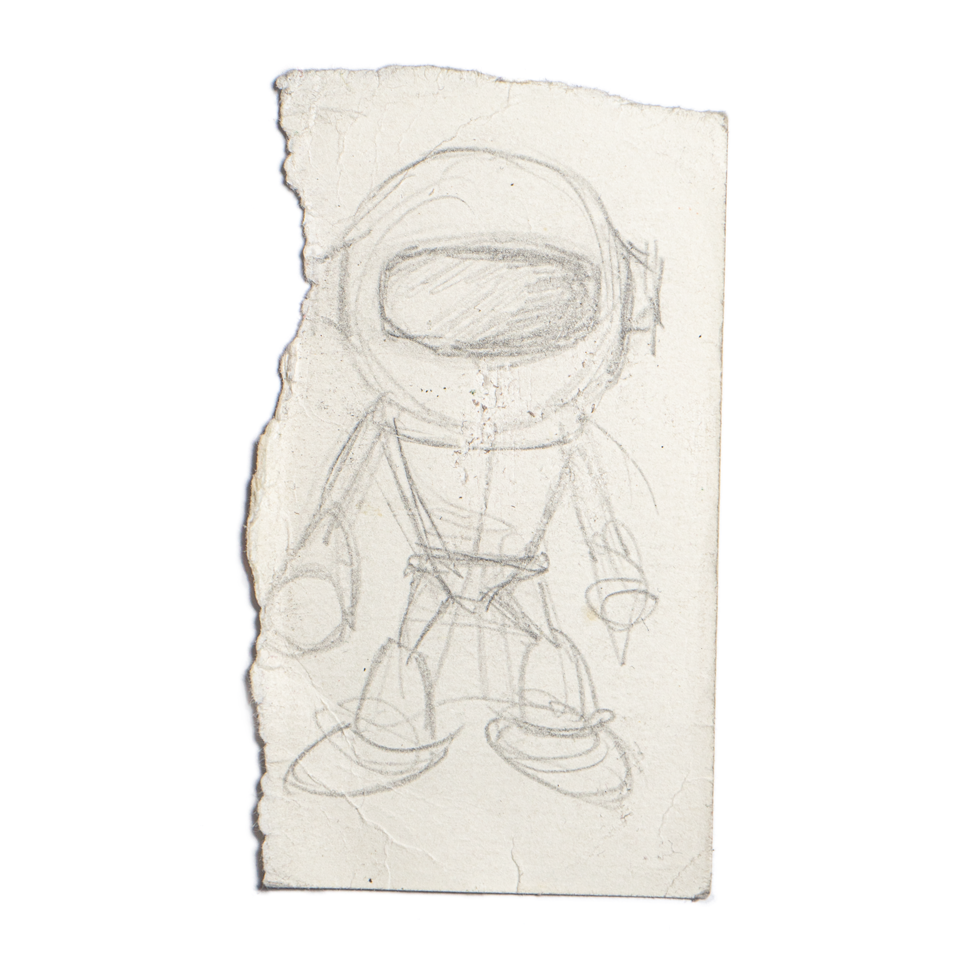
I drew Orbybot and gave the sketch to my wife. She carried it in her wallet for years. When I finally built the character in 3D, I wanted its construction to make sense. The joints and moving parts had to suggest a robot that could exist beyond the screen.
Making the whole film.
I developed and produced Snowbot 21 myself, working through the story, storyboard, modelling, rigging, animation, lighting, editing and compositing. With the character already established, I built a simple story around movement, timing and a turn of events.
The sled route gave the film its structure. I blocked out the terrain and camera positions, worked on the ride and the character’s reactions, then developed the winter landscape around them.
Three short experiments
More ways to play.
These short scenes explore the character beyond the main film. Play each clip to see the movement and timing. Sound is muted initially.
Carrot Cylinder
A short Orbybot experiment with a carrot and a top hat.
Traditional 3D production · no generative AI
TreeBot
Another small scene from Orbybot’s winter world.
Traditional 3D production · no generative AI
Sled Ride
Movement and timing built around the sled ride.
Traditional 3D production · no generative AI
Orbybot from every angle.
The model turntable reveals the character’s construction, proportions and materials.
Traditional 3D production · no generative AI
Under the surface.
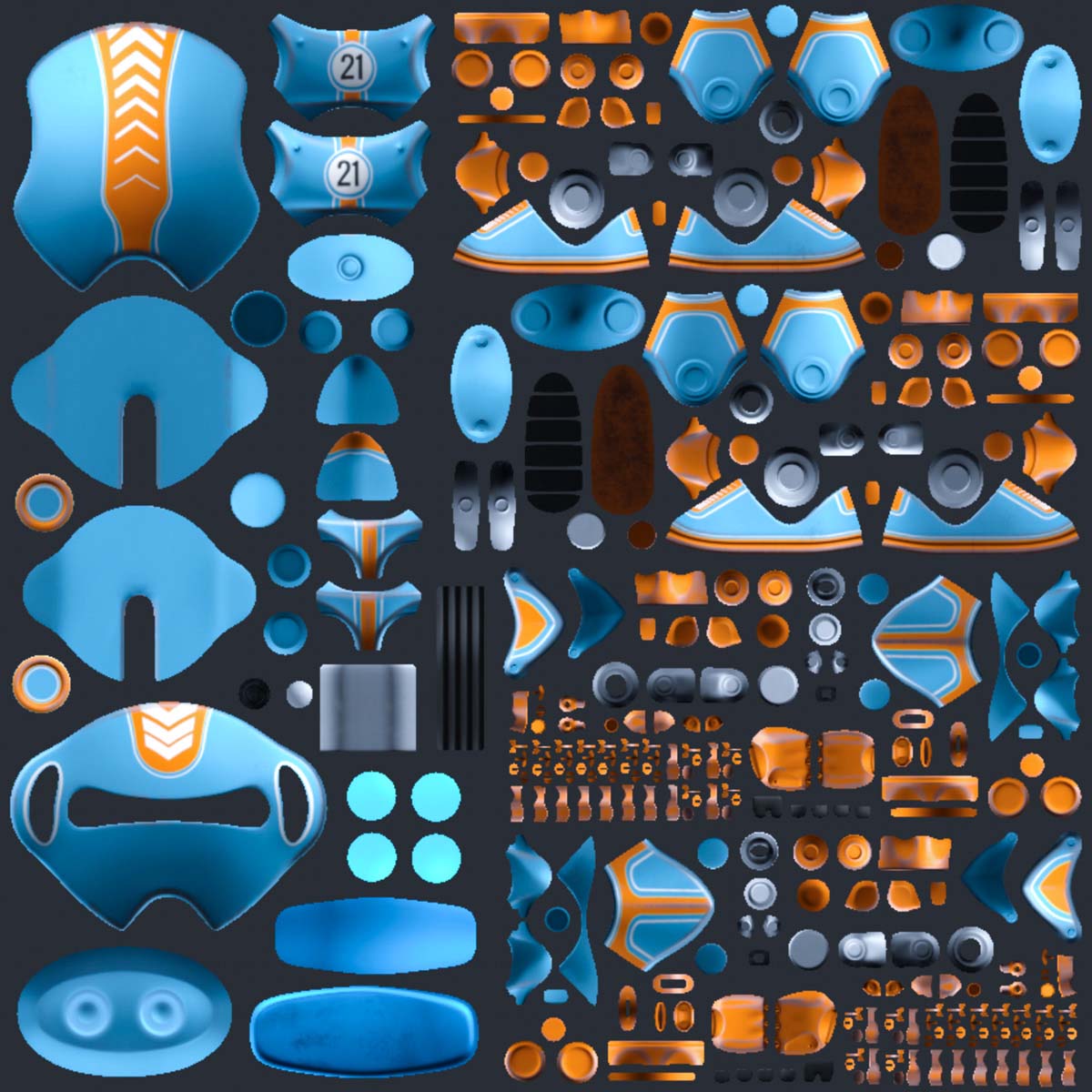
A shared UV layout brings the separate robot parts together for texturing. Paint, markings and wear can be considered across the whole character, helping the surface treatment support the design and animation.

Traditional 3D production · no generative AI
An experiment that travelled further.
The NAO commission drew on what I had learned from Orbybot, particularly the rig structure. I am now returning to my own character to explore interaction and physics in Godot. That work is still in development.
Production and sources
Concept, design and film production: Patrick Schürfeld. Audio assembled in Adobe Audition using original sounds and Audiojungle material; yodelling: Julien Apelian’s Audio Colors. Rendered with RebusFarm.